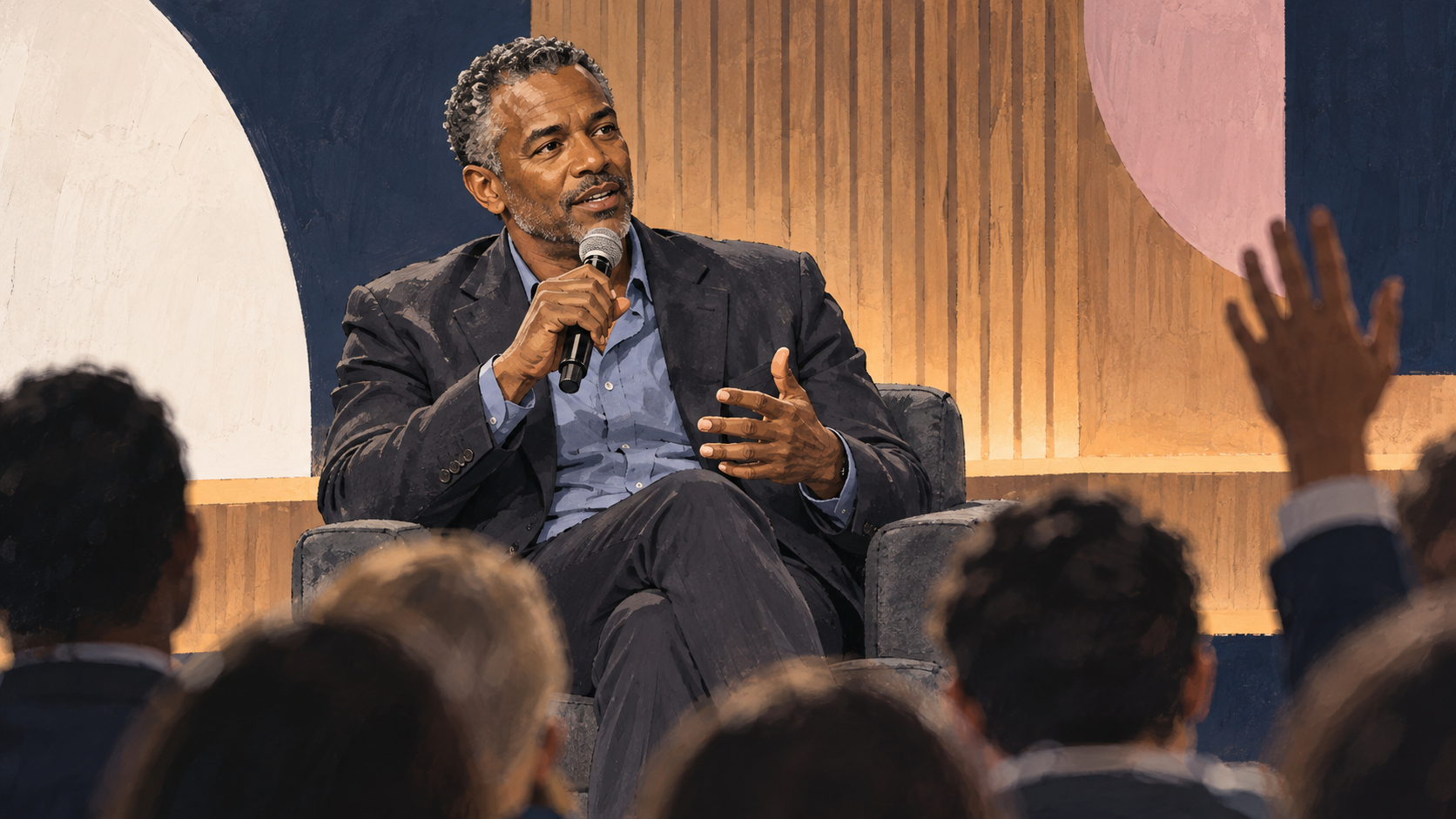
When your aging voice does not match the energy, confidence, and vitality you still feel
Many people reach their sixties, seventies, and beyond feeling active, capable, and fully engaged in life—then hear a voice that sounds weaker, older, or less certain than they feel. The mismatch is frustrating. You still have ideas to contribute, work to do, songs to sing, and relationships that depend on easy communication. Yet your voice fades, tires, turns hoarse, or disappears in the middle of a sentence.
An aging voice is common. It is not something you have to accept without evaluation or treatment. Voice is produced by a coordinated muscular system, and that system responds to targeted training. The goal is not to manufacture a younger identity. The goal is to restore strength, balance, ease, and reliability so your voice reflects the person you are now.
Ready to understand what your voice needs? Explore voice habilitation and rehabilitation at VoiceOver.
What an Aging Voice Sounds and Feels Like
Age-related voice change is often called presbyphonia. The term describes changes in voice associated with aging. The experience is personal, but the patterns are recognizable. People often report that speaking takes more effort and produces less sound.
Signs of an aging voice include:
- A weak or low-volume voice
- Hoarseness, raspiness, or breathiness
- Vocal fatigue after talking, working, teaching, or socializing
- Loss of speaking or singing range
- Difficulty starting the voice
- Voice that cuts out in the middle of words or sentences
- Needing to repeat yourself because other people cannot hear you
- A voice that sounds less vigorous than you feel
These changes affect more than sound. A voice that fades during a meeting, disappears in a restaurant, or fails during a song changes participation. People begin speaking less, avoiding noisy settings, handing conversations to someone else, or withdrawing from activities they enjoy.
Notice one of these aging voice changes? Request an individualized voice evaluation instead of guessing at the cause.
Why the Aging Voice Changes
Voice is not produced by the vocal folds alone. It relies on coordinated breath pressure, vocal-fold vibration, resonance, articulation, posture, and precise nervous-system control. Aging affects every part of that system, just as it affects the muscles used for walking, lifting, and balance.
Aging Voice Changes in the Vocal Folds
The vocal folds contain muscle and layered tissue. With age and reduced use, they lose bulk, tone, and pliability. When the folds do not meet firmly during vibration, air escapes through the gap. The result is a breathier, weaker voice that demands more effort for less volume. Clinicians refer to this tissue loss as vocal fold atrophy.
Aging Voice Changes in Breath and Support
The respiratory system supplies the energy for voice. Reduced chest-wall flexibility, diminished respiratory muscle strength, and inefficient coordination reduce the steady airflow needed for clear, sustained speech. A person starts a sentence adequately, then runs out of vocal power before the thought is finished.
Aging Voice Changes Across the Whole System
Changes in posture, neck and throat muscle balance, resonance, hearing, hydration, medication effects, and general activity level alter vocal performance. Disuse compounds the problem. When speaking becomes hard, people use the voice less. Less use produces further weakness—a cycle similar to avoiding exercise because the muscles feel weak. Changes due to ageing across the vocal system are often referred to as presbyphonia
Do not train one piece of the system in isolation. Learn how VoiceOver provides whole-system voice training.
When an Aging Voice Needs an ENT Examination
Aging explains many voice changes, but age does not explain every voice problem. Persistent hoarseness deserves direct examination of the larynx. In my clinical practice, hoarseness lasting longer than two weeks always triggers an ENT or laryngologist check. This protects the patient from having a lesion, paralysis, inflammatory condition, neurologic disorder, or other medical cause dismissed as “just aging.”
Seek prompt medical attention for hoarseness accompanied by difficulty breathing or swallowing, coughing blood, a neck lump, pain with speaking or swallowing, or complete voice loss. The National Institute on Deafness and Other Communication Disorders provides an overview of hoarseness, warning signs, diagnosis, and treatment.
Reliable patient information: NIDCD—Hoarseness
If your hoarseness has lasted more than two weeks, see an ENT or laryngologist to rule out a disease process.
How Aging Voice Treatment Works
The treatment plan comes from a comprehensive evaluation, not from a menu of exercises. Online lists encourage people to select techniques for themselves, but an exercise is useful only when it addresses the person’s physiology, coordination, vocal demands, and goals. The wrong task reinforces the wrong pattern.
In general, we strengthen and rebalance the muscular subsystems that support voice, then teach the client to use that renewed strength efficiently. Strength without coordination produces effort. Coordination without adequate strength produces a voice that cannot meet the demands of daily life. Effective treatment develops both.
A complete plan addresses the combination of systems identified during evaluation:
- Respiratory strength and breath-to-voice coordination
- Vocal-fold activation and efficient closure
- Resonance that carries sound without throat strain
- Ease and consistency at the beginning of words and sentences
- Volume, endurance, pitch range, and vocal flexibility
- Transfer of the new voice into conversation, work, singing, and social settings
Current research supports direct behavioral voice treatment for older adults with presbyphonia. A 2026 systematic review summarized by the American Speech-Language-Hearing Association found improvement in patient-reported outcomes, phonation time, and acoustic measures after behavioral intervention. Another 2026 systematic review and meta-analysis found meaningful improvement across treatment approaches and confirmed that real-world care includes voice therapy, augmentation, and surgery in different combinations.
Research: ASHA Evidence Maps—Behavioral interventions for presbyphonia · PubMed—Vocal fold atrophy systematic review and meta-analysis
Stop relying on generic exercises. Schedule a VoiceOver evaluation and receive a plan built from what your voice actually does.

What I Have Learned From Treating the Aging Voice
I have treated older adults who were still working, still singing, still leading, and still participating fully in their communities. Others simply wanted their everyday voice to sound as alive as they felt. They arrived with the same cluster of concerns: weakness, low volume, hoarseness, fatigue, reduced range, unreliable onset, and words that disappeared before a sentence was finished.
The most important lesson is that age alone does not determine the result. The entire system matters. So do the degree of disuse or atrophy, the client’s goals, and the client’s willingness to practice. I do not hand every person the same exercise sheet. I evaluate how the system works, identify what is weak or poorly coordinated, and build treatment from those findings.
This work is like going to the gym. A person does not rebuild strength by attending one session and watching someone else exercise. Progress comes from correct practice repeated consistently. My job is to make that practice precise, efficient, safe, and relevant to the voice the client uses in real life.
If your aging voice sounds older than you feel, review our voice habilitation and rehabilitation services and start with expert assessment.
How Long Aging Voice Improvement Takes
There is no honest universal timeline. The rate of improvement depends on the degree of disuse or atrophy across the system, the complexity of the coordination problem, the client’s daily vocal demands, and the consistency of home practice. A person with mild disuse and disciplined practice follows a different course from someone with significant tissue loss, reduced respiratory capacity, and years of compensatory strain.
Treatment does not end when the voice begins to sound better. Clients receive a maintenance program and need to continue it. Strength and coordination decline when training stops. Maintenance keeps the voice available for conversation, professional responsibilities, singing, and the moments that matter.
Choose consistency over a quick fix. Request an appointment to establish your starting point and a realistic plan.
When the Aging Voice Requires Medical Treatment
Some people have enough vocal-fold atrophy or closure difficulty that behavioral treatment alone does not produce the voice they want. That finding does not represent failure. It identifies a mechanical barrier that requires medical treatment, behavioral treatment, or both.
Medical options include procedures that add bulk to the vocal folds or improve their position so they meet more effectively during vibration. The laryngologist determines the appropriate procedure after examining the larynx. Voice therapy remains central before or after intervention because improved structure still requires efficient coordination.
When medical intervention belongs in the plan, we connect clients with well-regarded laryngologists and walk through the process with them—before, during, and after. That continuity matters. Patients understand the recommendation, know what to expect, and return to voice use with expert guidance.
Need coordinated aging voice care? Contact VoiceOver for evaluation, referral guidance, and treatment across the full process.
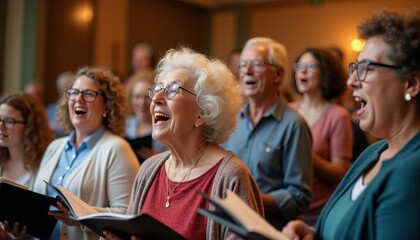
Your Aging Voice Is Trainable
A voice that has become weak, tired, hoarse, or unreliable is giving you information. It is not issuing a verdict on how old you are or how fully you get to participate. The first step is to identify what changed. The next step is targeted training, medical care when needed, and a maintenance plan that protects the gains.
You deserve a voice that supports the life you are living now: a voice with enough strength to finish the sentence, enough clarity to be heard the first time, enough endurance to stay in the conversation, and enough flexibility to sound like you.Request an appointment with VoiceOver Speech Pathology and begin building a voice that sounds