By Gerriann Jackson, M.S., CCC-SLP | Medical Speech-Language Pathologist, Voice Specialist, and Founder of VoiceOver Speech Pathology
Yes—targeted exercise can improve obstructive sleep apnea for the right person. But this is not a story about doing a few tongue movements from a social-media video and declaring your airway fixed.
The treatment is called orofacial myofunctional therapy, or OMT. It uses structured exercises and motor retraining for the tongue, lips, soft palate, cheeks, throat, breathing pattern, oral rest posture, chewing, and swallowing. Research shows meaningful improvements in apnea severity, snoring, sleep quality, and daytime sleepiness in selected patients. It also shows inconsistent results when the treatment dose is too low, adherence is poor, or the main cause of collapse is not being addressed.
My position is direct: OMT deserves earlier consideration in mild OSA, it deserves a place in the plan when a patient refuses CPAP, and it deserves attention when residual airway dysfunction remains after other treatments. It still begins with medical diagnosis and sleep-medicine oversight.
Your first action is to arrange a sleep evaluation and complete the testing recommended by your sleep clinician. Do that before contacting VoiceOver for exercise-based treatment.
First, Make Sure You Actually Have Sleep Apnea
Snoring, dry mouth, morning headaches, fatigue, restless sleep, and witnessed breathing pauses can point toward OSA. They cannot diagnose it. A home sleep apnea test or an in-laboratory polysomnogram measures the breathing events and oxygen changes needed to establish what is happening.
The American Academy of Sleep Medicine diagnostic guideline states that sleep testing belongs within a comprehensive sleep evaluation. It also explains when an in-laboratory study is safer than a home test, including significant heart or lung disease, suspected hypoventilation, neuromuscular weakness, chronic opioid use, stroke, and severe insomnia.
Once you have results, follow the recommendations from the sleep-medicine team. CPAP remains an established treatment, and custom titratable oral appliances have their own evidence-based pathway. Exercise should not become a reason to ignore oxygen loss, dangerous sleepiness, or cardiovascular risk.
Action: If you suspect OSA, ask your physician or a sleep-medicine practice for a diagnostic evaluation now. If the recommended treatment later fails, is not tolerated, or is refused, then contact VoiceOver.
What “Exercise” Means in Sleep Apnea Treatment
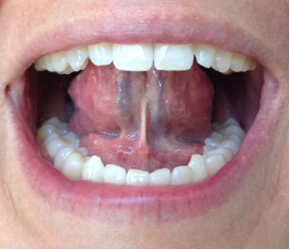
General physical activity and weight-related care can improve OSA, but myofunctional therapy is different. OMT directly trains the muscles and movement patterns that help shape and stabilize the upper airway.
A clinical program can address:
- Tongue elevation, lingual-palatal suction, strength, endurance, and movement without jaw compensation
- Soft-palate and lateral pharyngeal-wall movement
- Lip seal and cheek control
- Pharyngeal wall tone
- Comfortable nasal breathing after the nasal airway has been medically cleared
- Swallowing, chewing, jaw–tongue dissociation, and daytime oral rest posture
- Transfer from isolated exercises into automatic functional behavior
This is skilled rehabilitation, not a generic strengthening routine. Every patient does not need the same exercises, and a stronger tongue does not automatically mean a stable airway during sleep.
Action: If you already have a sleep-study diagnosis and your prescribed treatment has not worked for you, request a trained myofunctional evaluation instead of copying an exercise list online. VoiceOver offers in-person and telehealth appointments.
What the Research Actually Shows
The average improvement can be clinically meaningful
A 2026 systematic review and meta-analysis of 13 randomized trials involving 429 participants found that oropharyngeal training reduced the apnea–hypopnea index by an average of 7.55 events per hour. That is a meaningful change for a patient near the boundary between mild and moderate OSA. The same review found that daytime sleepiness did not improve consistently.
A 2025 network meta-analysis of 15 randomized trials found significant improvements in daytime sleepiness and sleep quality. Its pooled AHI result was not statistically significant across all protocols. Adults training for more than 30 minutes per day showed a stronger AHI response, which points to dose and adherence as major treatment variables.
In the landmark 2009 randomized trial in adults with moderate OSA participants practiced tongue, soft-palate, and lateral pharyngeal-wall exercises for about 30 minutes daily over three months. Average AHI fell from 22.4 to 13.7 events per hour. Sleepiness, sleep quality, snoring, and neck circumference also improved.
The Cochrane review of nine randomized trials reached a more restrained conclusion: OMT probably reduces daytime sleepiness and can improve sleep quality and AHI in the short term, but the studies were small and long-term evidence was limited.
Action: Bring the research to your sleep clinician and ask whether a defined OMT trial fits your diagnosis, oxygen data, symptoms, anatomy, and current treatment plan.
Dose and follow-through are not optional
Most positive adult programs require daily practice for roughly eight to twelve weeks, often 20 to 45 minutes per day and five to seven days per week. The therapist teaches the movements, corrects substitutions, progresses the load, and connects the exercises to breathing and oral function.
A 2025 randomized trial in mild-to-moderate OSA used 15 to 20 minutes of OMT and cervical exercise only three times per week. It found no significant between-group improvement in AHI, oxygenation, sleepiness, or quality of life. That negative trial matters. Low-frequency exercise cannot be assumed to produce the results seen in higher-dose protocols.
Action: Before starting OMT, decide whether you can complete accurate daily practice and attend follow-up visits. If the answer is yes and your sleep-medicine plan is not succeeding, request an evaluation at VoiceOver.
Who Should Consider Myofunctional Therapy?
People with medically confirmed mild OSA
My clinical view is that OMT deserves discussion early in mild OSA before a patient automatically moves toward a device or surgery. This does not mean bypassing the sleep physician. It means adding function-focused rehabilitation to the treatment conversation while the disease burden is still mild and before years of maladaptive breathing and oral patterns become further entrenched.
The plan still needs a defined treatment period and repeat objective testing. Feeling better or snoring less does not prove that OSA is controlled.
Action: Ask your sleep clinician whether an OMT trial is appropriate for your mild OSA. With that medical plan in place, contact VoiceOver for an upper-airway and myofunctional evaluation.
People who refuse or cannot use CPAP
The AASM PAP guideline supports positive airway pressure as an established adult OSA treatment. CPAP works when it is used. Some patients still decide they will not use it, even after troubleshooting the mask, pressure, dryness, anxiety, and support barriers.
Refusing CPAP should lead to another treatment plan—not untreated OSA. Depending on the person, that plan can include a custom oral appliance, positional treatment, weight-related care, surgery, or myofunctional therapy. Moderate disease, major oxygen loss, severe sleepiness, and cardiovascular risk require faster control and closer medical oversight.
Action: Tell your sleep clinician plainly if you are not using CPAP. Ask for an alternative plan, then contact VoiceOver if OMT is included or if a trained upper-airway evaluation would help guide the next step.
Teenagers who reject PAP for social reasons
Adolescent PAP adherence is often poor. A study of PAP use in youth with OSA found suboptimal use and highlighted the difficulty of maintaining treatment during the transition from pediatric to adult care. For a teenager worried about sleepovers, appearance, relationships, travel, or feeling different, a technically perfect device that stays in the closet is not treating the disease.
OMT gives some teens an active, private routine they can practice during the day. It does not replace pediatric sleep care, and caregiver support still matters. The severity of OSA determines how much risk exists while an alternative is being tested.
Action: Have the teenager, caregiver, and pediatric sleep clinician agree on a realistic plan. If OMT is part of that plan, VoiceOver provides telehealth and in-person treatment options.
People with persistent OSA after another treatment
I treat upper-airway patients whose first treatment pathway has not solved the problem, including people with persistent concerns after Inspire surgery. The correct response is not to assume that the procedure failed for one simple reason. It is to identify the remaining collapse pattern and the functional impairments that are still present.
Action: If your follow-up sleep study still shows OSA after CPAP, an oral appliance, surgery, or Inspire, return to the sleep and surgical teams first. Then contact VoiceOver for a coordinated functional evaluation.
Why the Pattern of Airway Collapse Matters
OSA is not one uniform blockage. Collapse can involve the soft palate, tongue base, epiglottis, lateral pharyngeal walls, or several levels at once. Drug-induced sleep endoscopy, or DISE, can help the surgical team see the pattern.
Hypoglossal nerve stimulation primarily improves airway opening by activating tongue movement. Research on upper-airway stimulation shows that lateral pharyngeal-wall collapse is associated with a lower treatment response. A newer 2026 systematic review examined the same relationship.
Mandibular advancement devices move the lower jaw forward and can enlarge the airway, but response varies with anatomy and collapse pattern. OMT addresses muscle performance, coordination, and oral function. Direct evidence that it reliably rescues every Inspire or oral-appliance failure caused by lateral-wall collapse does not exist. That is precisely why a functional evaluation must be tied to the DISE findings, sleep study, and medical plan rather than sold as a universal cure.
Action: Ask your surgeon or sleep clinician what structure is collapsing and whether the follow-up study confirms adequate control. If pharyngeal function remains part of the problem, send the findings to VoiceOver and request an evaluation.
What Myofunctional Therapy at VoiceOver Looks Like
I am a medical speech-language pathologist and voice specialist with extensive training in upper-airway disorders and myofunctional therapy. I have worked with an OSA surgeon at the University of Rochester Medical Center on multiple projects involving myofunctional therapy. That experience shapes a medical, function-based approach—not a wellness program built around a standard sheet of tongue exercises.
A VoiceOver evaluation reviews the sleep-study findings, current treatment, surgical history, nasal-airway status, symptoms, and treatment goals. The functional examination looks at tongue mobility and elevation, strength and endurance, lingual-palatal suction, lips and cheeks, jaw–tongue coordination, breathing pattern, swallowing, chewing, and oral rest posture.
Treatment is individualized. A typical plan includes supervised instruction, a daily home program, technique and adherence tracking, functional carryover, coordination with the medical team, and a firm plan for objective sleep reassessment. VoiceOver does not diagnose OSA and does not tell patients to stop CPAP or another prescribed therapy.
Action: After completing your sleep evaluation and trying the plan recommended by sleep medicine, request an appointment with VoiceOver if the treatment has failed, cannot be tolerated, or is being refused.
What Exercise Cannot Do
Myofunctional therapy has limits. A responsible program states them clearly.
- It cannot diagnose OSA or determine oxygen risk without a sleep study.
- It cannot remove enlarged tonsils, repair major nasal obstruction, or correct every craniofacial restriction.
- It cannot treat central sleep apnea or hypoventilation.
- It cannot guarantee that mild OSA will normalize or that moderate OSA will become mild.
- It cannot prove success through a quieter bed partner report, a wearable score, or less daytime fatigue.
- It is not mouth taping. Routine mouth taping is not an evidence-based OSA treatment and can be unsafe when nasal breathing is obstructed.
- It does not justify stopping CPAP, changing an oral appliance, or delaying recommended surgery without the treating clinician.
Action: Choose a provider who requires medical diagnosis, coordinates with the sleep team, documents the exercise dose, and insists on objective follow-up. VoiceOver follows that sequence.
The Right Order of Care
The safest and most useful pathway is straightforward:
- Get evaluated by sleep medicine and complete the recommended sleep study.
- Review the severity, oxygen data, symptoms, anatomy, and treatment options with the sleep clinician.
- Follow the recommended treatment and report barriers honestly.
- If that treatment fails, cannot be tolerated, is refused, or leaves residual OSA, ask whether myofunctional therapy belongs in the next plan.
- Complete a trained myofunctional evaluation and follow the daily program accurately.
- Repeat objective sleep testing before assuming that OSA is controlled or changing another treatment.
Action: If you have completed the first three steps and still need another path, call VoiceOver at (585) 623-6400, text (585) 365-4633, or submit the secure contact form.
Contact VoiceOver Speech Pathology
VoiceOver Speech Pathology provides specialized upper-airway and myofunctional services in Rochester, New York, with telehealth appointments available. The office is located at 1655 Elmwood Avenue, Suite 125, Rochester, NY 14620.
Call: (585) 623-6400
Text: (585) 365-4633
Online: Request an appointment or send a message
Action: Contact VoiceOver after your sleep study and after you have followed—or made a documented decision with your sleep clinician about—the recommended treatment. Bring the sleep-study report, treatment history, and any DISE or surgical findings to the evaluation.
Research and Professional Resources
- AASM diagnostic-testing guideline for adult OSA
- AASM guideline for positive airway pressure treatment
- AASM/AADSM oral-appliance clinical practice guideline
- 2026 randomized-trial meta-analysis of muscle training for OSA
- 2025 network meta-analysis of myofunctional therapy
- Cochrane review of myofunctional therapy for OSA
- ASHA Practice Portal: Orofacial Myofunctional Disorders
- VoiceOver Speech Pathology upper-airway specialist profile
Action: Use these resources to prepare questions for the sleep-medicine team. If the medical plan identifies myofunctional therapy as the next step, schedule with VoiceOver.
This article provides general education and does not replace diagnosis, emergency care, or individualized medical advice.